Feb 2020
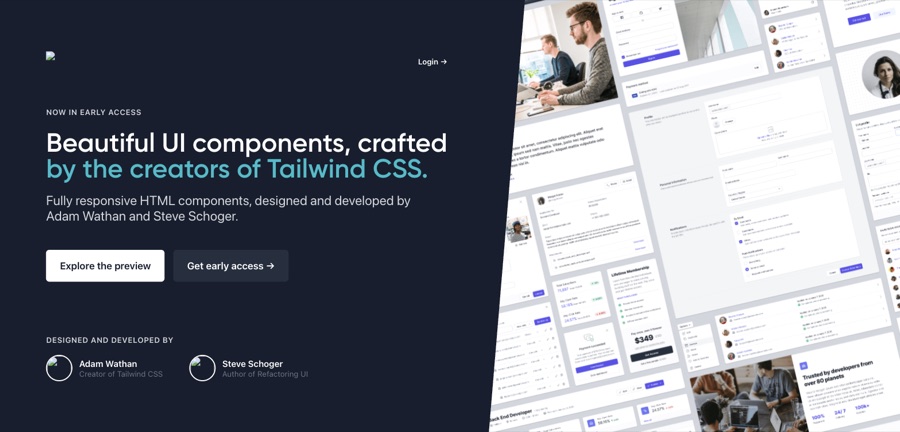
Tailwind UI ships indigo-500 buttons
Tailwind UI ships its demo buttons in indigo-500. Tutorials repeat the default for years and models learn it as what a button looks like.
tailwindui.com, March 2020, via the Wayback Machine
The chronology
When the defaults were born and when people started noticing, 2020 through 2026. Scroll down; ticks mark months.
Feb 2020
Tailwind UI ships its demo buttons in indigo-500. Tutorials repeat the default for years and models learn it as what a button looks like.
tailwindui.com, March 2020, via the Wayback Machine
Sep 2022
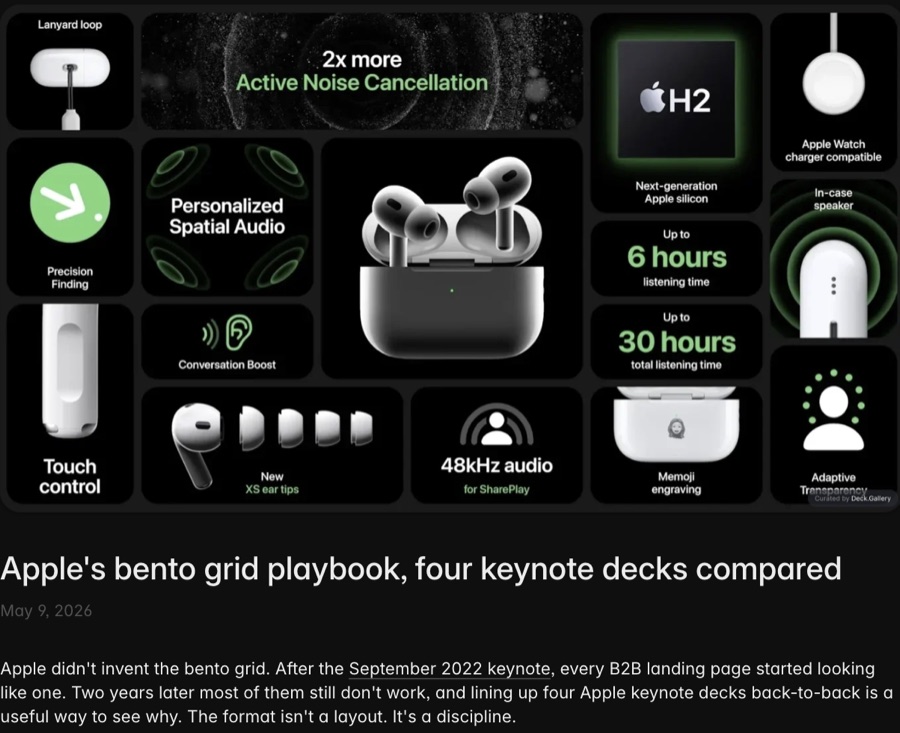
Keynote recap slides pack features into compartments and marketing sites copy the shape. The bento grid dates from here.
Apple keynote slide via deck.gallery
Nov 2022
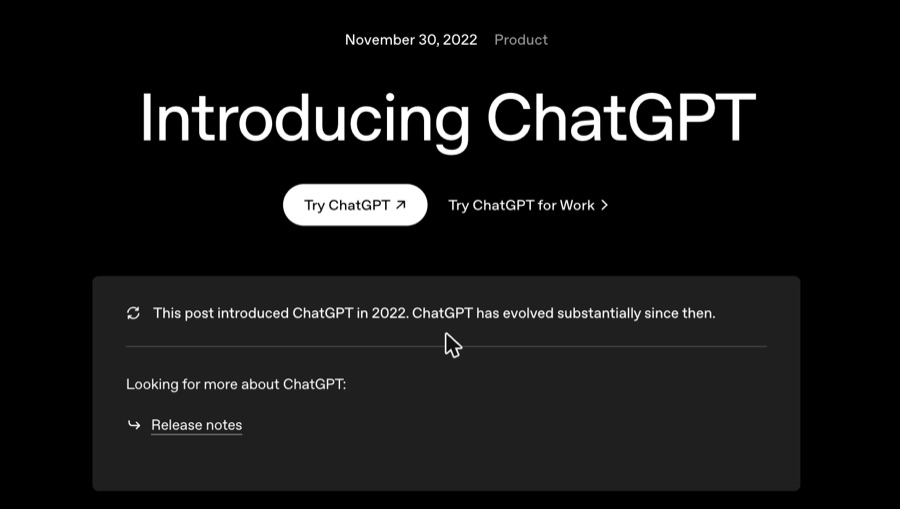
Generated copy starts reaching the web and brings words like transform and elevate with it. The punctuation now associated with generated text stayed flat for another twenty months.
openai.com/index/chatgpt
Jan 2023
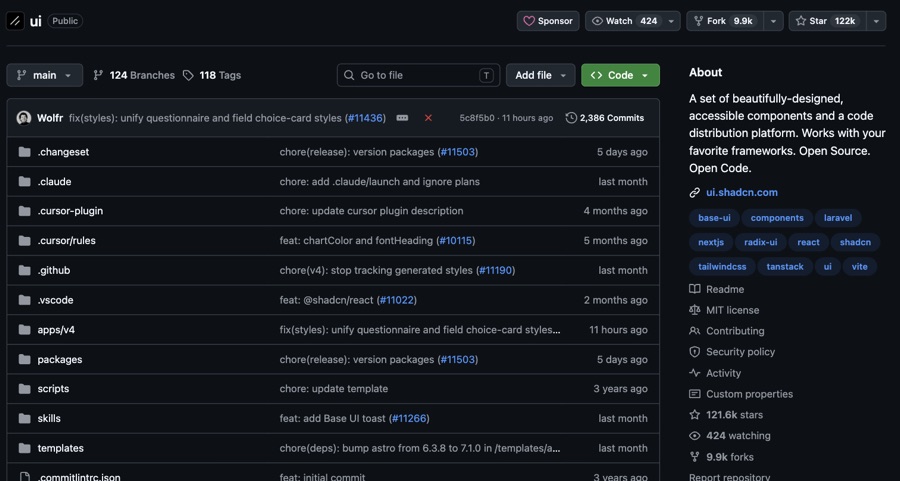
The component kit most AI tools scaffold with: muted grays and rounded corners on identical cards. The HTTP Archive detected shadcn/ui on 26,791 origins in November 2024 and 203,217 by August 2026, rising in each of the twenty-two crawls between. The detector arrived two years after the library, so the curve dates the spread rather than this launch.
github.com/shadcn-ui/ui — repository created January 4, 2023
Jan 2023
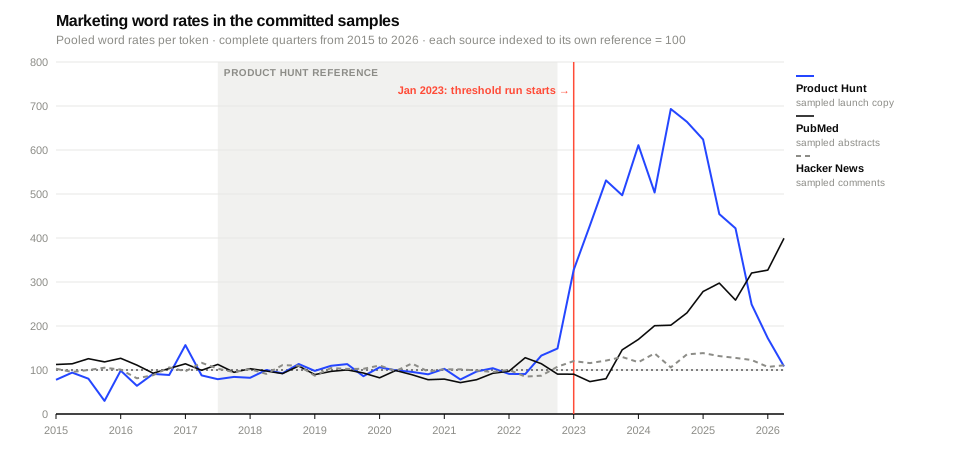
The tracked word rate reaches 6,878 occurrences per million tokens in January 2023. January 2023 begins a run above the threshold across the tested settings. The count does not establish what caused the increase.
Our measurement: Product Hunt launches with PubMed abstracts and sampled Hacker News comments, collected August 19 2026; pooled quarterly rates from data/derived/hype-basket.json
Apr 2023
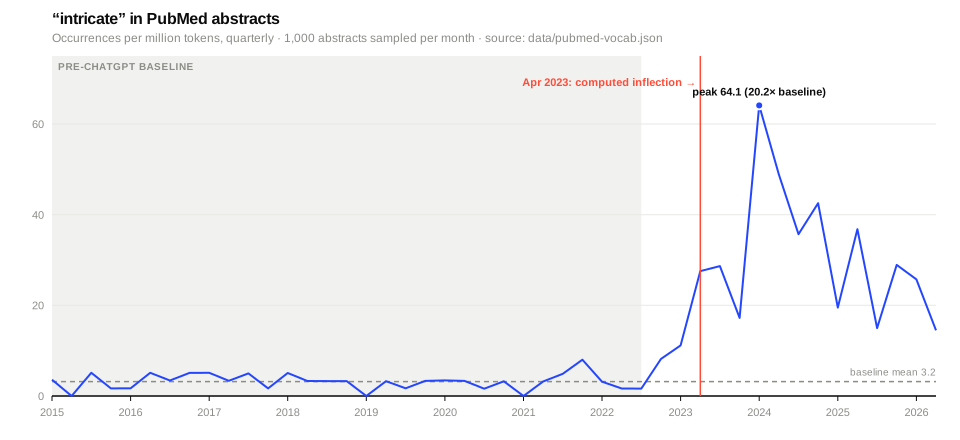
Within a year of ChatGPT's launch, “intricate” leaves its eight-year baseline in PubMed abstracts and peaks in early 2024 at twenty times its old rate. The trailing year runs at a third of that peak. That makes it the earliest tell we have watched fade.
Our measurement: 1,000 PubMed abstracts per month via NCBI E-utilities, collected August 2026 (data/pubmed-vocab.json)
Nov 2023
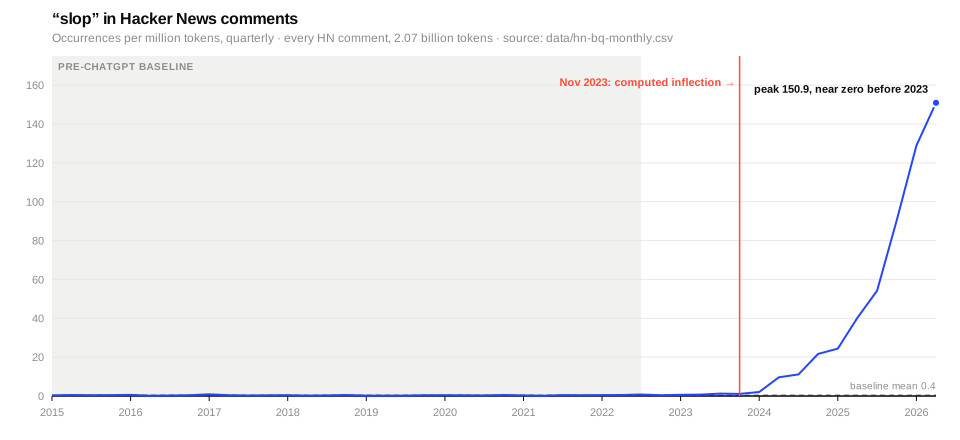
Hacker News settles on a name for what is filling the feed. “Slop” goes from 0.4 occurrences per million tokens to 116, a 290-fold rise. That puts it third among 24,104 words behind “claude” and “anthropic”.
Our measurement: every Hacker News comment, 2.07 billion tokens, via the BigQuery public dataset, collected August 2026 (data/hn-bq-monthly.csv)
Dec 2023
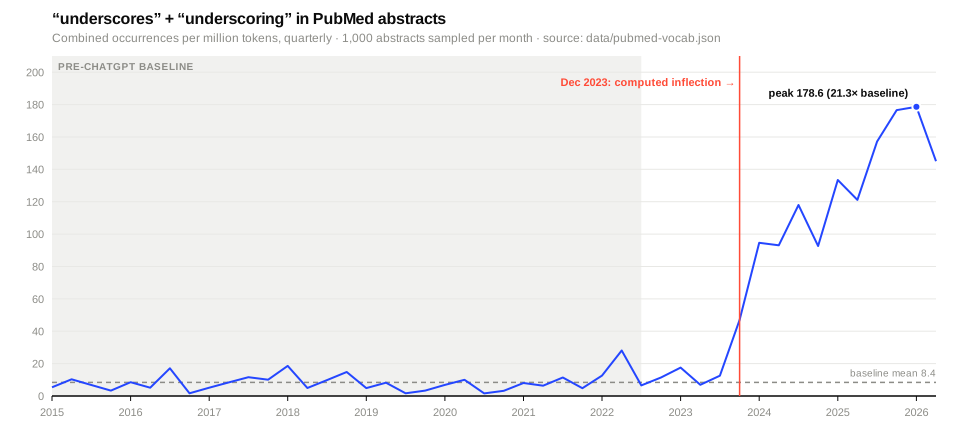
“Underscores” and “underscoring” start a climb to twenty-one times baseline in PubMed abstracts. Unlike “intricate” this one has not come down. Its highest quarter is January 2026 and the trailing year sits at nineteen times.
Our measurement: 1,000 PubMed abstracts per month via NCBI E-utilities, collected August 2026 (data/pubmed-vocab.json)
Apr 2024
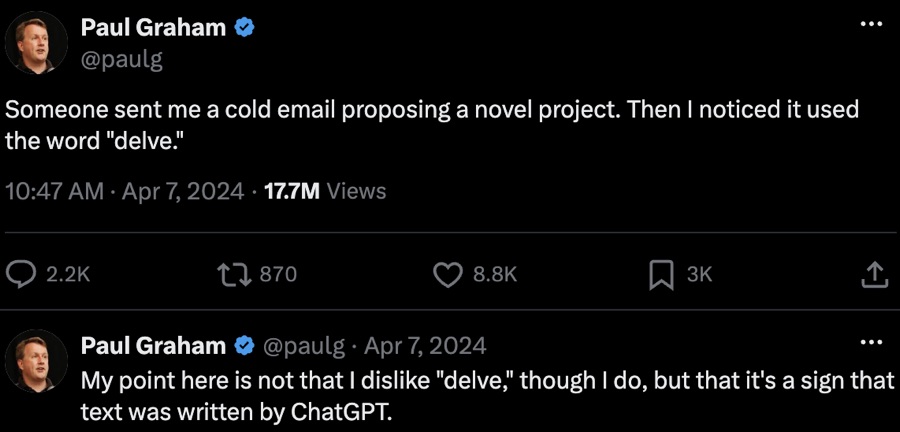
Paul Graham reads one word and calls the whole email generated. The post is seen seventeen million times and delve becomes the first copy tell most people know.
x.com/paulg, April 7, 2024
Aug 2024
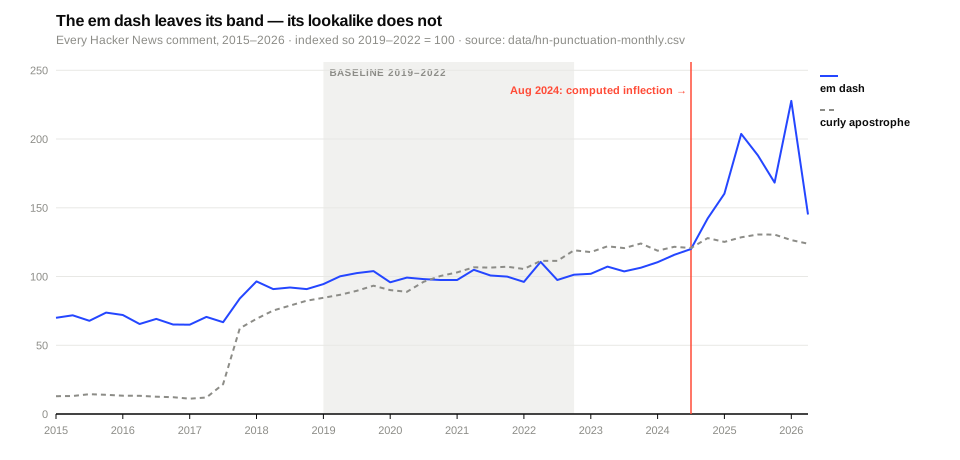
Across thirteen billion characters of Hacker News comments the em dash held flat at 34 per million for five years. It left its band in August 2024 and doubled by mid-2025. The curly apostrophe arrives by the same autocorrect route and stayed put.
Our measurement: every Hacker News comment, 13.2 billion characters, via the BigQuery public dataset, collected August 2026 (data/hn-punctuation-monthly.csv)
Jan 2025
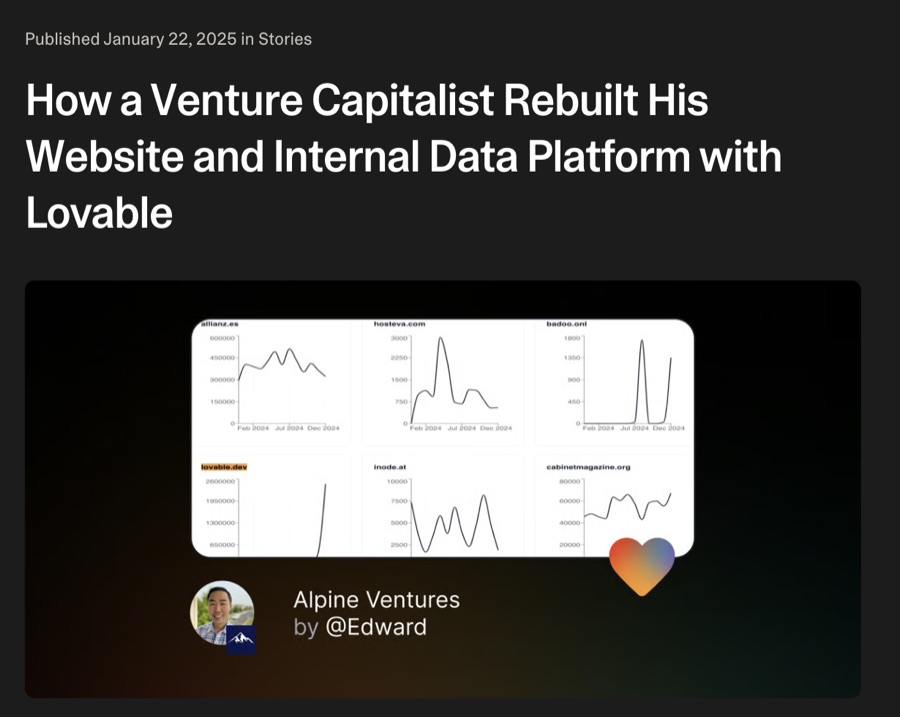
Lovable documents an AI-built VC site from one broad prompt, with only surface edits. One-prompt sites make the starter pack ubiquitous.
lovable.dev blog
Feb 2025
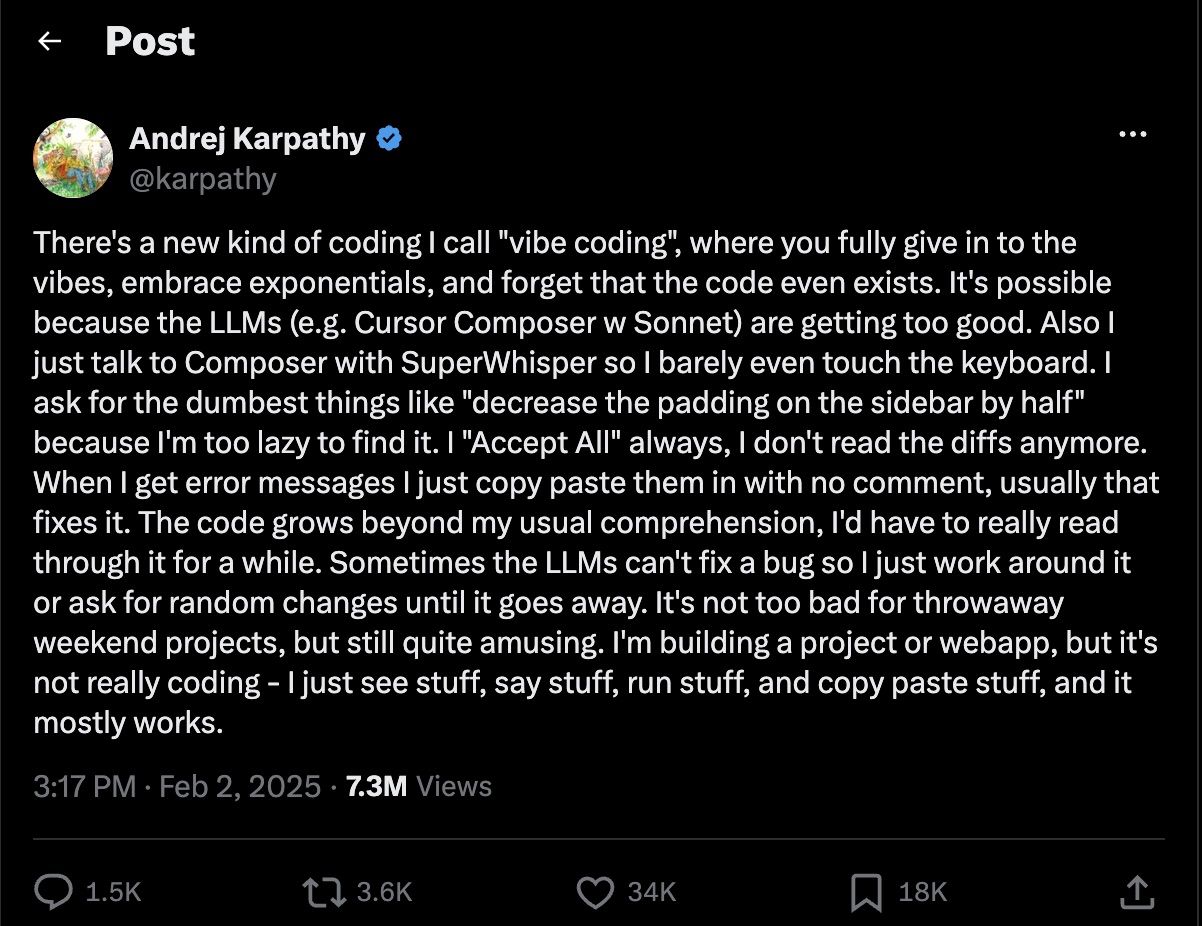
Andrej Karpathy posts a throwaway line about giving in to the vibes and forgetting the code exists, and a way of working acquires a name. Hacker News had run for eighteen years without the phrase; within weeks it was everywhere on the site.
x.com/karpathy, February 2, 2025
Feb 2025
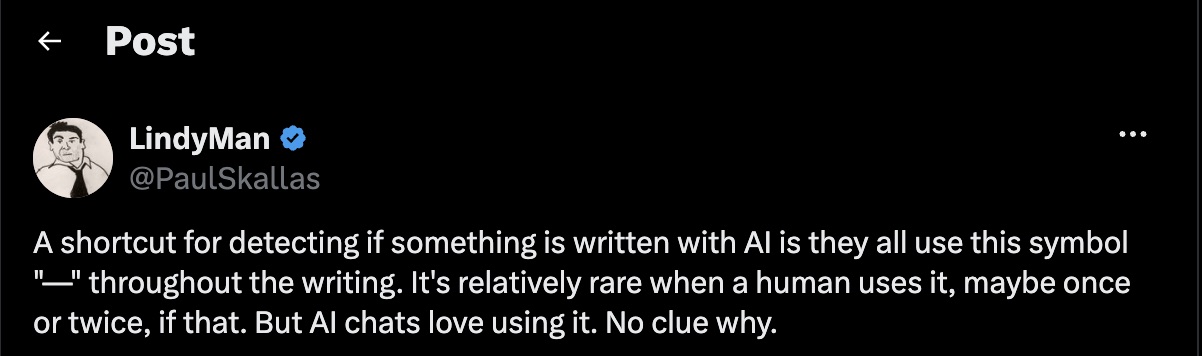
A post seen by millions turns a punctuation mark into evidence: if the writing is full of em dashes, a machine wrote it. The punctuation itself had moved six months earlier, in August 2024. The habit arrived before the name for it.
x.com/PaulSkallas, February 11, 2025. Cropped above the post he was quoting: the writer he accused is a private matter and is not reproduced here.
Aug 2025
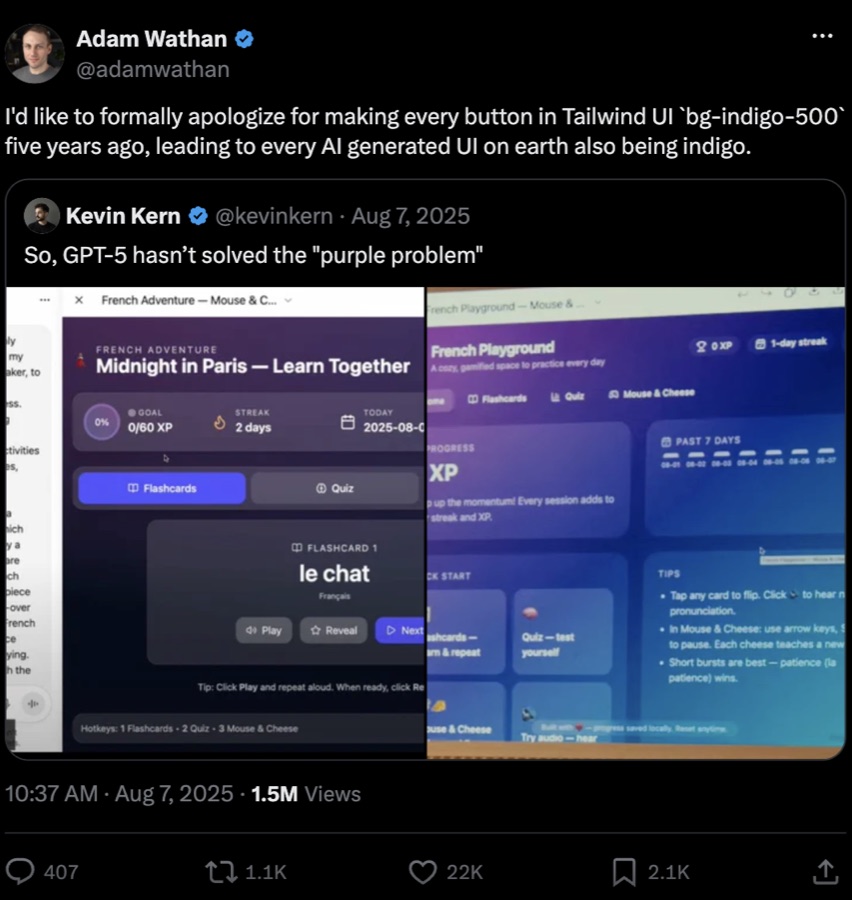
A 1.5-million-view mea culpa for the button color that turned every AI interface purple. The indigo tell enters common knowledge.
x.com/adamwathan, August 7, 2025
Nov 2025
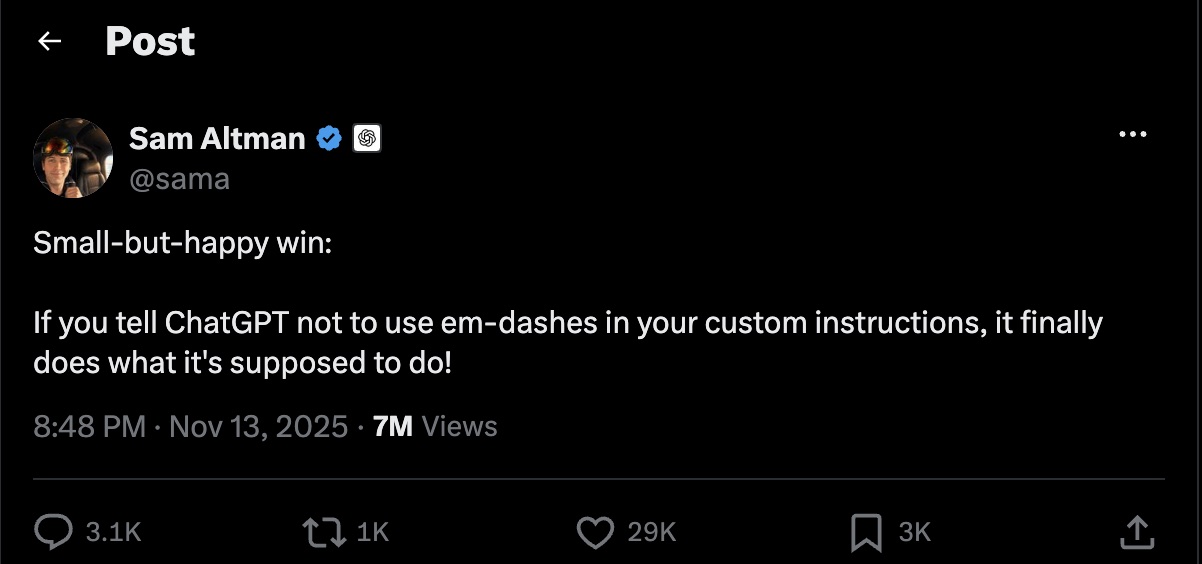
Sam Altman calls it a small-but-happy win: tell ChatGPT to stop using em dashes in your custom instructions and it finally obeys. Our own series shows no dent in the months that follow. The em dash sat at 56 per million characters that month and reached its all-time high of 94 three months later.
x.com/sama, November 13, 2025
May 2026
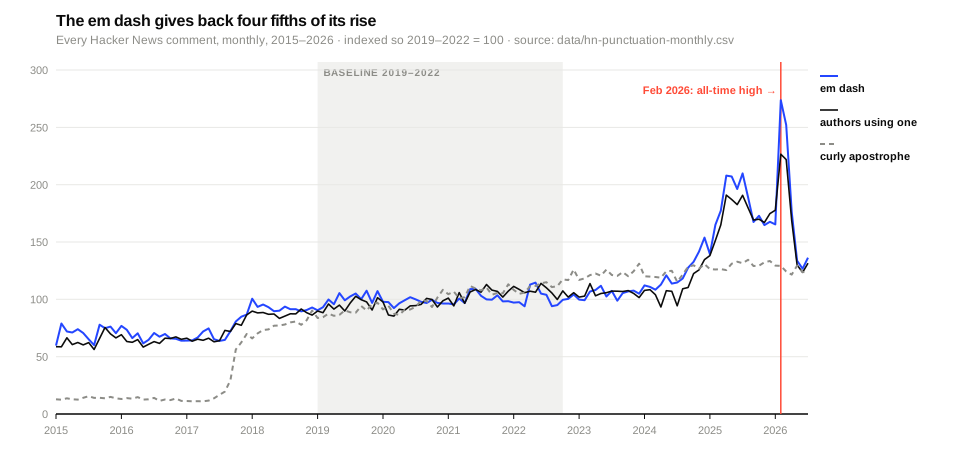
After an all-time high in February 2026 the em dash drops for three straight months on Hacker News, from 274 on the index where its pre-ChatGPT band is 100 down to 132. The curly apostrophe sits at 126 on the same index, so the gap that made the mark a tell has nearly closed. The share of accounts posting one fell from 7.7 percent to 4.4, so this is fewer people writing that way rather than a few pasting generated text. Three months is a short tail and the cause is not in the data.
Our measurement: every Hacker News comment, 13.2 billion characters, via the BigQuery public dataset, collected August 2026. Monthly rates indexed to the 2019 to 2022 average; fall dated by the first of three consecutive months more than three standard deviations below the preceding six (data/hn-punctuation-monthly.csv, data/derived/emdash-retreat.json)