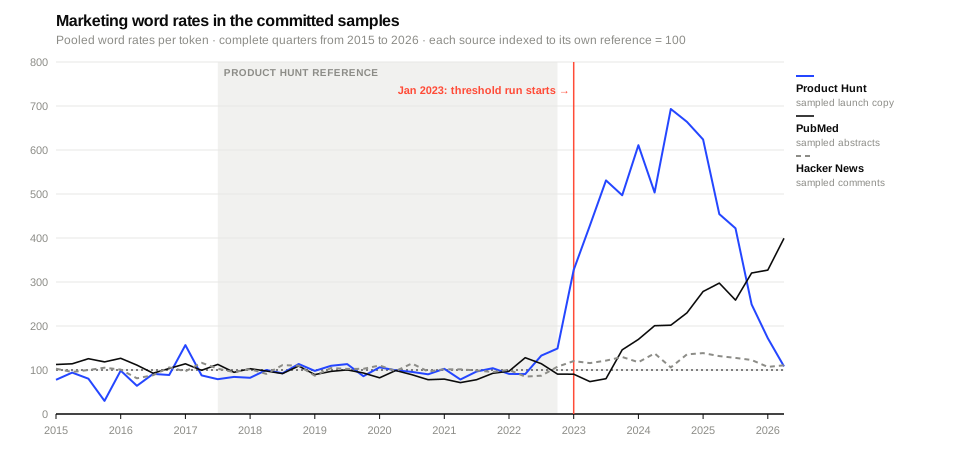
The Product Hunt rate peaked at 6.89 times baseline in the second half of 2024 and fell to 1.41 in the first half of 2026. PubMed abstracts reached 3.62 times baseline over the latter period. These counts describe word use in the stored samples and do not identify AI authorship.
We combined counts for the stored marketing words
The script groups 43 word forms including “effortlessly” and “streamline”. The stored vocabulary differs between datasets and the count includes only available words. Adding their occurrences gives an aggregate rate but does not show whether they cluster in individual posts.
The monthly rate crossed the threshold in January 2023
The Product Hunt sample averaged 2,302 occurrences per million tokens from August 2017 through October 2022. The January 2023 rate was 6,878 and began a run of months above the threshold of 4,332. This dates a measured increase without establishing its cause.
The rule detects a sustained threshold crossing
The script records the first month of a run above the baseline mean plus three standard deviations. The run must last at least three months with at least five occurrences each month. This rule does not test whether the baseline was flat or whether the underlying trend changed.
The Product Hunt rate fell after late 2024
The highest half-year rate was 6.89 times baseline in July through December 2024. It fell to 1.41 in the first half of 2026. “Effortlessly” declined from 1,452 occurrences per million tokens during 2024 to 169 during January through July 2026.
The Hacker News dictionary shows a smaller increase
The BigQuery dictionary records 220 occurrences per million tokens during January 2015 through October 2022 and 254 during August 2025 through July 2026. It contains 285,026 baseline occurrences and the recent rate is 1.15 times baseline. The sampled monthly series has no sustained threshold crossing; the dictionary itself provides only totals for the comparison periods.
The rate in sampled abstracts increased
The PubMed sample averaged 446 occurrences per million tokens from January 2015 through October 2022. The recorded threshold crossing ranges from December 2023 to June 2024 across the tested settings. The rate reached 3.62 times baseline in January through June 2026 with 2,243 occurrences.
Counts of ai cannot establish the product mix
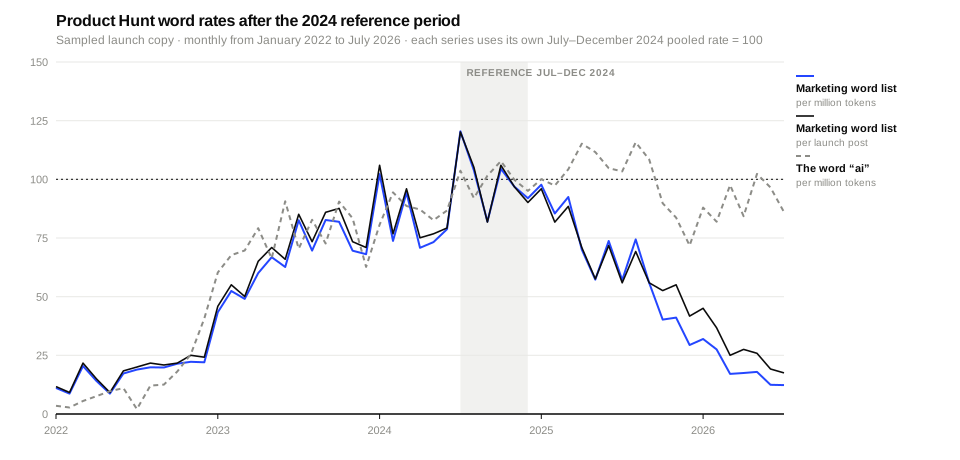
The monthly marketing-word rate and the rate for “ai” correlate at r = 0.816 from August 2017 through July 2026. The correlation is 0.489 from July 2024 onward. Mentions of “ai” do not measure the share of AI products or rule out changes in product mix as an explanation for the decline.
The rate fell per token and per post
Sampled Product Hunt posts became longer in October 2025. Comparing July through December 2024 with January through July 2026 gives declines of 81 percent per token and 72 percent per post. The decline appears with either denominator but these checks do not explain why it happened.
The stored sample omits some words and posts
Rare words can fall below the dataset's storage threshold. Missing entries for “delve” and “underscore” do not establish that those words were absent from launch copy. Selecting the newest 200 launches each month gives greater weight to the end of the month as launch volume grows.
Word rates cannot identify AI authorship
The datasets do not establish whether people or models wrote the text. Different sampling methods and stored word lists limit comparisons between the sources. The observed changes do not make an individual marketing word a reliable sign of generated copy.